



ART TALKS | BLACK IS BEAUTIFUL: The Kwame Brathwaite Story
Kwame (and Robynn!) you did good. | or, a story of a life well-lived.
JOIE DE VIVRE | by Logan Nakyanzi Pollard | November 14, 2025

left to right: the filmmakers: producer Joanna Boateng, director Yemi Bamiro, Robynn & Kwame, and DOC NYC moderator
If you’re in NYC, do go out and see it: the next screening is this Monday:
It was just after yesterday’s screening of BLACK IS BEAUTIFUL: The Kwame Brathwaite Story— which is a film featured in this year’s DOC NYC festival.
“You did good.”
This was all I could think to say to Kwame, who bears the same name as his dad: Kwame Brathwaite.
The film was too moving to me to say anything more, and I knew he knew what I meant. I knew some parts of what his wife Robynn and he had to muscle through— and yet, they’d done it. They’d honored their dad: not only with this truly beautiful film, but also with countless other interviews, and a book, and with their ongoing work cataloguing Kwame Brathwaite Sr.’s prodigious archive of images.
Why am I telling you all this?
In summary: Kwame Brathwaite’s work, his life, grew out of the situation in Harlem in the 1950’s, and the terrible things that were happening to black people (i.e. the Emmitt Till murder) and Kwame with his brother Elombe, like characters from Life is Beautiful or a Wes Anderson film, imagined another reality— the real reality— that became the BLACK IS BEAUTIFUL movement.
I stopped and started writing this essay a few times this morning partly because, we know the family and as their friends, it’s weird to try to encapsulate everything in a way that makes sense.
Turns out we just love them, isn’t really a good essay . . .
Even with family and friends, you really don’t see them fully. And this film helped me understand some important things about living a good life.
~
I remember when Barack Obama was running for president the first time— and feeling myself that I didn’t want him to run, because this would be too much— What about his safety? What about upsetting the tenuous balance “we” achieved by going to the right schools and having the right jobs? — Wouldn’t it be better if everyone just stayed in their prescribed lives, and didn’t rock the boat?
Now years later— these concerns all seem laughable, and not because there wasn’t danger, but because you cannot live constantly setting limitations on yourself or meditating on what you fear might happen.
So many barriers of oppression have come down.
And this is because many of the limitations we create or accept are false concepts. This false reality— that was what Kwame Brathwaite was breaking down.
Thank God.
~
I grew up in a (mostly) white world— and yet, even as child, I felt the reverberations of Brathwaite’s work. I was impacted like vibrations rushing over our society— I was not beautiful by the standards of the day.
And yet, seismically, I felt I was.
This subterranean shift, I think, was in part because of what he was doing.
I am speaking poetically and concretely at the same time.

my mom reading me a story
There’s always a danger of hagiography with those we love, many “great” men and women were actually truly horrible people. And as for artists— they can be the worst: egotistical, cruel, self-destructive . . . we gloss over the bad to get to the good.
Not the case here.
I remember Kwame’s dad as kind, and funny, and focused, and sensitive, yet disciplined. He was a person who cared about and for people. But not to the point of being puffed up or really just about his ego. Nor, was he attention grabbing. He saw people.
- This was a man of God.
He probably would have demurred from such a statement. But the best sermons are preached without words. For example, when he saw the horror of what happened to Emmitt Till, a youngster traveling in the South, who was violently killed in the mid-fifties by racists; the gruesome picture of his corpse was published widely— Brathwaite decided he was going to counter that horror with images of black beauty— not black defilement.
This is an interesting principle: You cannot just criticize what’s wrong. You have to replace it with something else.
He responded to evil with joy. Not because he loved evil, but because he would not let it be the narrative.
You can tell from this film, that his joy— aside for his loved ones— was his work. You can almost see his heart smiling as he looks into his camera view.
Oh, to live a life ignited by your true passion!
This was a man who did this: not because any one person was watching, or for special recognition, but because it was right and was what was in his heart:
And whatsoever ye do, do it heartily, as to the Lord, and not unto men;
Knowing that of the Lord ye shall receive the reward of the inheritance: for ye serve the Lord Christ.
Colossians 3:23-24
But how do I really know this? That he was a good man, and a man of God?
Because strait is the gate, and narrow is the way, which leadeth unto life, and few there be that find it.
Beware of false prophets, which come to you in sheep’s clothing, but inwardly they are ravening wolves.
Ye shall know them by their fruits. Do men gather grapes of thorns, or figs of thistles?
Even so every good tree bringeth forth good fruit; but a corrupt tree bringeth forth evil fruit.
A good tree cannot bring forth evil fruit, neither can a corrupt tree bring forth good fruit.
Every tree that bringeth not forth good fruit is hewn down, and cast into the fire.
Matthew 7:14-19
I see the way his work made people feel, and the way we all felt after that film: My old classmates were buzzing; one couldn’t stop talking she was so alive with excitement. This is the energy OF LIFE OF GOD OF JESUS saying:
LIVE!
LIVE!
LIVE!
2. Your life matters, more than you think.
Every life matters. And a life well-lived can change the world, save lives and do miracles. If I drew a picture of that one choice Kwame and Elombe made, it’d be like a side-ways cornucopia, or a beautiful bouquet of flowers spilling over . . .
And this is what the best art does: it gives people permission to be who they have always been. For example:
At the end of the screening, some of the women who’d been photographed and who had modeled in the early days stood— their silver and white hair in beautiful afros and dreads, like halos over their heads. Their faces were vibrant with life and glitter and smiles; their outfits were like from another world:
They literally looked like superheroes.
Brathwaite’s work turned the lights on.
And I was looking at royalty.
And this was why the room was buzzing. Because Kwame’s dad reminded us all that that is who we all are.
~
A photographer’s mind is poised for beauty:
the curve of a person’s back
the smile of a child
the graceful movement of two dancers in love
We just see these things. The best capture them not in a predatory way— but as if to say: God: You are so beautiful! My heart is so full of gratitude!
Divine sparks inhabited by God.
We are all special.
He spoke specifically to black people because this situation needed to be addressed.
But his message was and is universal.
In fact, in his career he photographed people from all walks of life— the most important celebrities of the past century . . . and not because “they were celebrities” or to validate a corrupt entertainment system, but because he wanted to celebrate excellence.
3. When men move, things change.
Yes, of course, women . . . I think if you read my essays you know I’m not going to say what’s pc, but rather what the truth of the matter is, and it’s this: when men start to say: enough, when they lead: things really change. Why? Because it heals the foundation of society: family. A woman cannot do everything; and she cannot heal society on her own.
What Kwame and his brother Elombe did through art: and this is important because they wisely understood that this is not some kind of governmental project— but a question of values, aesthetics, personal agency, etc. They decided they wanted to celebrate black culture generally, and they decided to uplift black women specifically by celebrating their natural hair— not the permed and pressed, and relaxed hair styles of that time.
Hair in those days was a metaphor for aspirationally fitting into a society that did not value or accept them. Art was their reaction to the collective degradation they felt (not by imagination) in American society at the time.
4. There is justice.
Kwame Brathwaite and his family’s important and unique contribution to our world was not fully appreciated (as you will see in the film).
Thousands of images, important political encounters, scores of lives transformed, an entire movement begun . . . and so on totally ignored except by a few people who knew the story.
And what was known had often been coopted or reduced to something small and exploitative. We all know how that works.
This film puts flesh on the bones of the narrative of a life, and you will see how the Brathwaite family’s momentous contributions had been written out of the American story.
But then, his devoted son stepped in.
And slowly methodically, he and his wife began to catalog, share and fight back, as it were.
~
At Kwame’s dad’s funeral, which was held at a packed church in Harlem— and where lines of people queued up to say how he’d impacted their lives— we all poured out into the street and the atmosphere was— What’s next? Where’s the afterparty? And this was a crowd of people, many of whom were geriatrically leaning towards 70+.
Have you ever been to a funeral like that?
This is a life well-lived.
Robynn and Kwame are family friends, as I’ve said. And as I watched one family video, in my mind’s eye, I realized— Kwame’s middle son looks almost exactly like his dad.
And I remember something his little one did (this is not in the film, but just a remembrance)— his son one day, this was when he was really little, he kept quietly moving the potted plants that were outside, slowly shifting them every so often.
And one of us asked him what he was doing:
And he said:
So that they can have sunlight.
God is working through each generation— we are a continuity.
Love never ends.
Unto him be glory in the church by Christ Jesus throughout all ages, world without end. Amen.
Ephesians 3:21
See the film.
details:
BLACK IS BEAUTIFUL: The Kwame Brathwaite Story—
I would be remiss in not also acknowledging the extraordinary filmmakers of this production: producer Joanna Boateng and director Yemi Bamiro:
It’s scary putting your life story in the hands of others. I knew the broad strokes of Brathwaite’s story, but they revealed his personal and professional evolution with such care, beauty and finesse. The moments where they portray the love that Brathwaite has for his wife— through his work; and the clip of the salsa dancing . . . or his “liberation” check-list . . . just a few moments from an extraordinary, insightful, God-led film. — Logan
what: this film is part of the DOC NYC festival
where: 11/13 was @ SVA Theatre (333 West 23rd Street, New York, NY) check updated location for Monday.
when: fest runs in person from November 12-20 and online from November 12 – 30.
conversation:
Have thoughts? Subscribe and you may like, share and post comments via our ‘hello again’ newsletter and the comments section– dated NOVEMBER 14, 2025
additionally:
we’ve got books and classes.
about our new book
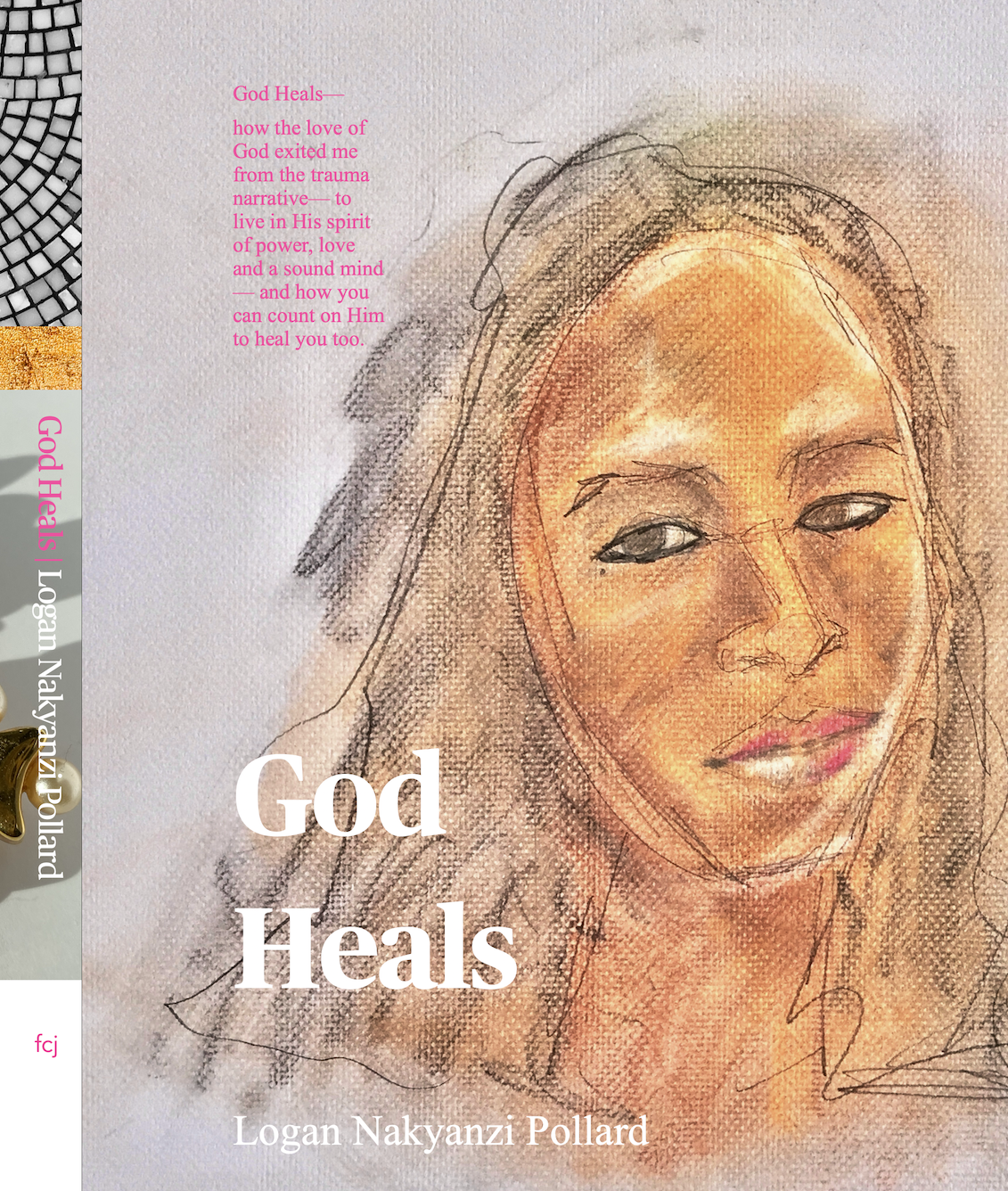
God Heals —how the love of God exited me from the trauma narrative— to live in His spirit of power, love and a sound mind— and how you can count on Him to heal you too. Hardcover – August 11, 2025
by Logan Nakyanzi Pollard (Author)